

2026 Nissan Rogue vs 2026 Hyundai Tucson: Which Compact SUV Wins?
The 2026 Nissan Rogue produces 201 hp, outpowering the 2026 Hyundai Tucson's 187 hp by a meaningful margin. The Rogue also returns 32 combined MPG versus the Tucson's 28, a clear efficiency advantage in the same fuel type. This page lays out every key difference so you can shop the right SUV at Fort Worth Nissan.
The Short Answer
The 2026 Rogue is the stronger choice for shoppers who prioritize fuel economy, standard safety content, and flexible cargo management. The Tucson fights back with a longer powertrain warranty, a standard 12.3-inch touchscreen across its lineup, and a substantially higher tow rating of 2,750 lbs for non-hybrid trims. Neither vehicle is a poor pick, but the differences are real enough to matter depending on how you drive.
Specs Head-to-Head
| Specification | 2026 Nissan Rogue | 2026 Hyundai Tucson (ICE) |
|---|---|---|
| Engine | 1.5L VC-Turbo 3-cyl | 2.5L 4-cyl naturally aspirated |
| Horsepower | 201 hp | 187 hp |
| Torque | 225 lb-ft | 178 lb-ft |
| Transmission | CVT | 8-speed automatic |
| Drivetrain | FWD / AWD | FWD / AWD |
| Fuel Economy (combined) | 32 MPG | 28 MPG |
| Fuel Economy (city/hwy) | 29 / 36 MPG | 25 / 33 MPG |
| Towing Capacity | 1,500 lbs | 2,750 lbs |
| Cargo (seats up) | 31.6 cu ft | 38.7 cu ft |
| Max Cargo | 74.1 cu ft | 74.8 cu ft |
| Seating | 5 | 5 |
| Basic Warranty | 3 yr / 36,000 mi | 5 yr / 60,000 mi |
| Powertrain Warranty | 5 yr / 60,000 mi | 10 yr / 100,000 mi |
Performance and Powertrain
The Rogue's 1.5L VC-Turbo three-cylinder is one of the more unusual engines in this segment. Variable compression ratio technology lets it adjust dynamically between efficiency and output, producing 201 hp and 225 lb-ft of torque on regular gasoline. That torque figure is especially strong for the class, arriving at 2,800 rpm and giving the Rogue a responsive feel in everyday acceleration.
The Tucson counters with a larger 2.5L four-cylinder that makes 187 hp and 178 lb-ft of torque. Its 8-speed automatic transmission shifts smoothly and provides a familiar, conventional driving experience that many buyers prefer. However, the Tucson's naturally aspirated setup gives up measurable output to the Rogue in both horsepower and torque.
Where the Tucson wins decisively is towing. At 2,750 lbs, it outhauls the Rogue's 1,500-lb rating by a wide margin, making it the only logical choice if you plan to pull a small trailer, boat, or camper regularly.
The Rogue returns 29 city and 36 highway MPG on FWD trims. The Tucson ICE manages 25 city and 33 highway. Over 15,000 miles annually, that gap adds up at the pump.
Interior, Space, and Cargo
Both vehicles seat five adults and offer a similar passenger experience at a surface level, but the details separate them.
The Rogue carries 31.6 cu ft of cargo behind the second row, compared to the Tucson's 38.7 cu ft. That is a notable gap in everyday grocery and gear hauling. The Tucson also offers a dual-level cargo floor standard across the lineup. Maximum cargo with seats folded is nearly identical: 74.1 cu ft for the Rogue versus 74.8 cu ft for the Tucson.
The Rogue closes the gap with its available Divide-N-Hide cargo system, which reconfigures into six positions and expands usable cargo volume to 36.3 cu ft with seats up on equipped trims. That system adds genuine flexibility that the Tucson's fixed floor cannot match.
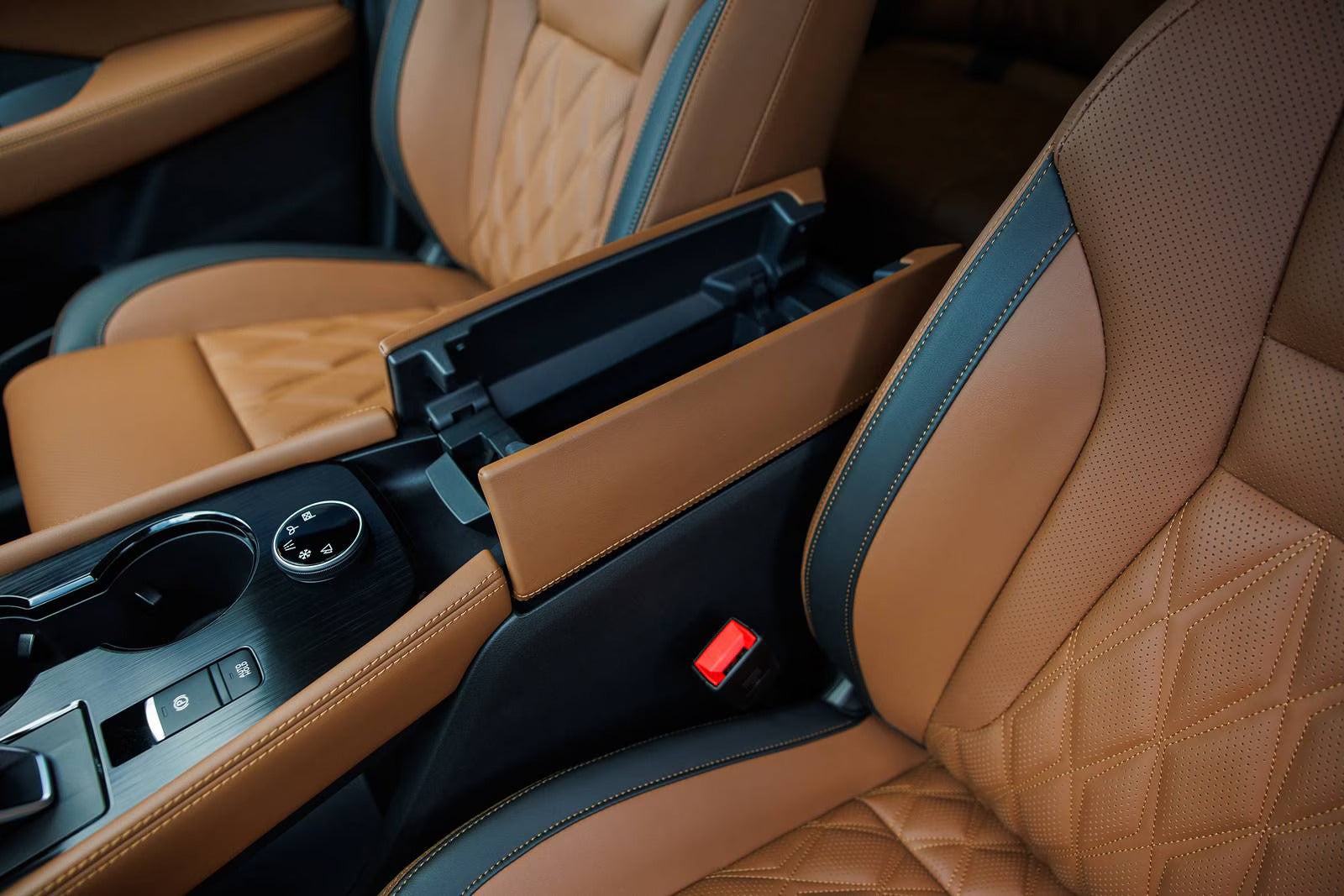
Front legroom is tighter in the Tucson (41.4 inches) than in the Rogue (41.5 inches), a wash in practice. Rear legroom also tracks closely. Both interiors are competent, though the Rogue's available semi-aniline leather on the Platinum and the Rock Creek's exclusive leatherette give it a stronger material story at upper trims.
The Rogue offers an available Dual Panel Panoramic Moonroof on the SV trim level. The Tucson's panoramic sunroof is reserved for the Limited trim only.
Technology and Safety
The Tucson leads one meaningful tech category out of the gate: its 12.3-inch touchscreen is standard on every ICE trim, while the Rogue provides an 8-inch screen on the S and SV trims and upgrades to a 12.3-inch unit only on SL and Platinum. Wireless Apple CarPlay and Android Auto are standard on every Tucson trim. The Rogue offers wireless connectivity starting at the SL trim, with wired integration on lower configurations.
The Rogue answers with a richer available tech list at its upper trims: ProPilot Assist 2.1 with hands-free highway driving capability, Google Built-In and Amazon Alexa Built-In, an available 12.3-inch digital instrument cluster, and an available HD Enhanced Intelligent 3D Around View Monitor. The Tucson's hands-free driving system, Highway Driving Assist 1, arrives at the SEL Premium trim.
On safety, both vehicles come well equipped. The Rogue includes Blind Spot Intervention (active lane intervention when a blind-spot threat is detected), Rear Cross-Traffic Alert with Automatic Braking, Rear Parking Sensors, Lane Keeping Assistance, and Intelligent Forward Collision Warning with AEB as standard across the lineup. The Tucson includes Forward Collision-Avoidance Assist with pedestrian, cyclist, and junction-turning detection, Lane Following Assist, Blind-Spot Collision Warning, and Rear Cross-Traffic Collision-Avoidance Assist as standard.
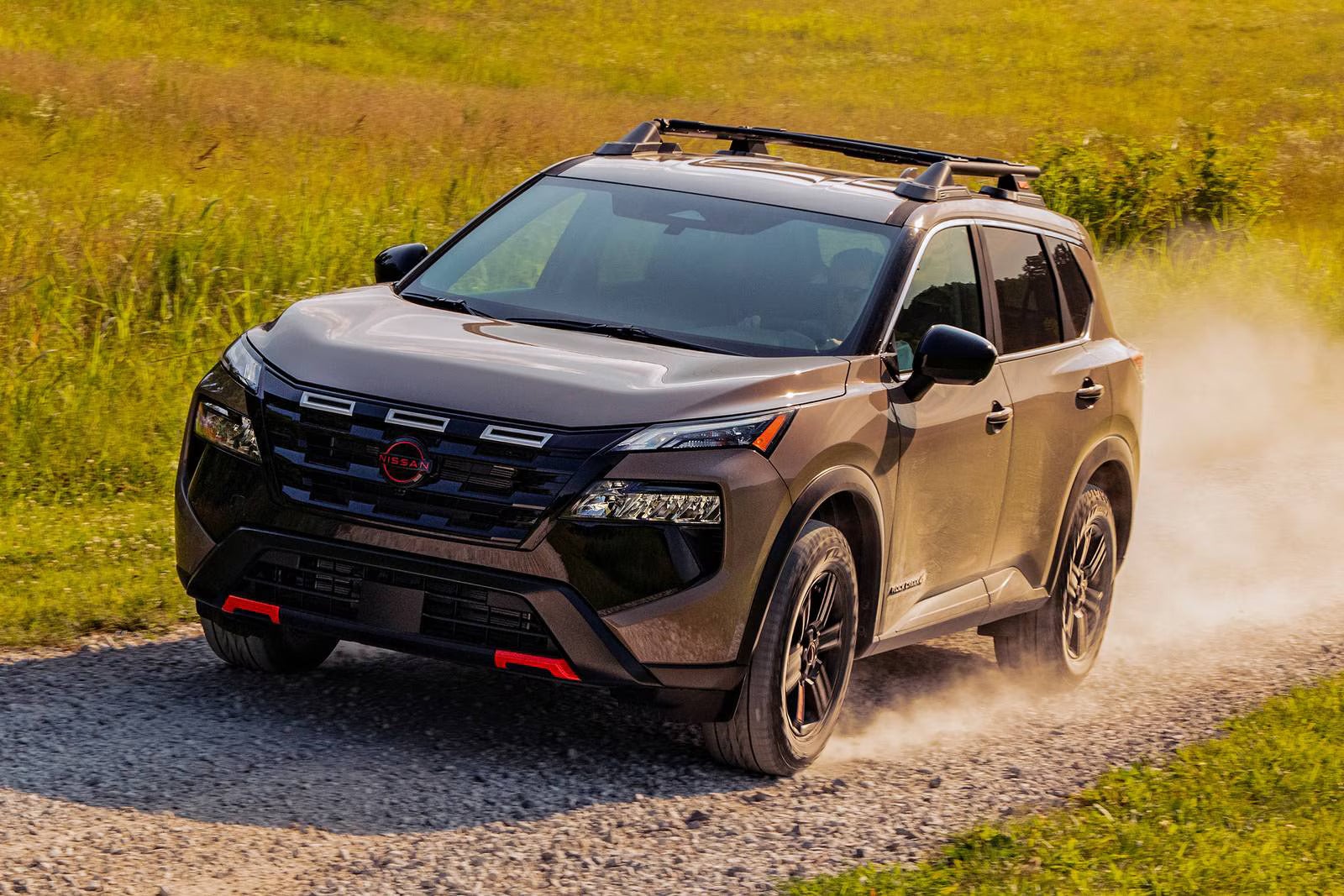
The Rogue's Rock Creek AWD trim adds an Off-Road Mode to its camera system, while the Tucson's XRT adds a Terrain Mode with mud and sand settings for 2026.


Value and Ownership
The Tucson's warranty is a category winner. Its 5-year / 60,000-mile basic coverage doubles the Rogue's 3-year / 36,000-mile basic warranty, and its 10-year / 100,000-mile powertrain coverage is twice as long as the Rogue's 5-year / 60,000-mile powertrain warranty. For buyers who plan to keep a vehicle long-term, that difference is real protection.
The Rogue's advantage is fuel economy. Four MPG better in combined driving means meaningful savings over the ownership cycle for most Fort Worth-area commuters logging highway miles on I-30 or I-20.
The Rogue also includes NissanConnect Services powered by SiriusXM with a 5-year Select trial and 1-year Premium trial standard. That is a substantial connected-services package built into the purchase. Over-the-air updates come standard on both vehicles.
The Rogue's available AWD trims, including the off-road-leaning Rock Creek and the style-focused Dark Armor, offer differentiated options that the standard Tucson ICE lineup does not replicate. The Tucson counters with hybrid and plug-in hybrid variants that add efficiency and total system output well beyond the ICE comparison, though those powertrains fall outside the direct gas-to-gas matchup here.
Which One Should You Buy
Choose the 2026 Nissan Rogue if: You prioritize fuel economy (36 MPG highway is class-strong), want more power and torque from a smaller engine, value available hands-free highway driving tech, or want niche trims like the Rock Creek AWD or Dark Armor that serve specific style and off-road interests. Fort Worth drivers with heavy highway commutes get a tangible MPG benefit that compounds quickly.
Choose the 2026 Hyundai Tucson if: You need to tow regularly (2,750 lbs versus 1,500 lbs), want a longer factory warranty for long-term ownership confidence, prefer a 12.3-inch touchscreen and wireless CarPlay as standard from the base trim, or want more behind-the-seat cargo space (38.7 cu ft) for everyday hauling without optional systems.
See the 2026 Rogue for Yourself at Fort Worth Nissan
The numbers favor the Rogue on power and efficiency. The Tucson holds an edge on towing and warranty length. But specs read differently once you are behind the wheel. Fort Worth Nissan carries 2026 Rogue inventory across multiple trim levels, including Rock Creek AWD and Platinum AWD, ready for a test drive. Check current availability and find the configuration that fits your driving life.
Frequently Asked Questions
Does the 2026 Nissan Rogue get better gas mileage than the 2026 Hyundai Tucson?
Yes. The 2026 Rogue earns 32 combined MPG (29 city / 36 highway) on FWD trims, compared to 28 combined MPG (25 city / 33 highway) for the Tucson ICE. That is a 4 MPG combined advantage for the Rogue.
Which has more cargo space, the Rogue or the Tucson?
The Tucson carries more cargo behind the second row: 38.7 cu ft versus 31.6 cu ft for the Rogue. Maximum cargo with seats folded is nearly equal (74.8 vs 74.1 cu ft). The Rogue's available Divide-N-Hide system adds flexibility with six cargo configurations.
Does the Rogue have more horsepower than the Tucson?
Yes. The 2026 Rogue produces 201 hp and 225 lb-ft of torque from its 1.5L VC-Turbo engine. The 2026 Tucson ICE produces 187 hp and 178 lb-ft from its 2.5L four-cylinder.
Which SUV can tow more?
The 2026 Tucson ICE tows up to 2,750 lbs, which is significantly more than the Rogue's 1,500-lb rating. If towing is a regular need, the Tucson is the stronger choice.
Does the Rogue come with hands-free driving?
ProPilot Assist 2.1, which enables hands-free highway driving, is available as an option on the 2026 Rogue SL and Platinum trims.
Which has a better warranty, the Rogue or the Tucson?
The Tucson's warranty is longer: 5 years / 60,000 miles basic and 10 years / 100,000 miles powertrain. The Rogue offers 3 years / 36,000 miles basic and 5 years / 60,000 miles powertrain.
Is the 12.3-inch screen standard on the Rogue?
No. The 2026 Rogue includes an 8-inch touchscreen on S and SV trims. The 12.3-inch touchscreen is available on SL and Platinum trims. The Tucson offers a 12.3-inch screen standard across all ICE trims.
Does the 2026 Rogue have AWD?
Yes. AWD is available on most Rogue trims and comes standard on the Rock Creek and Platinum configurations. Snow and Off-Road drive modes are included with AWD-equipped trims.

New vehicle pricing includes all offers and incentives. Tax, Title and Tags not included in vehicle prices shown and must be paid by the purchaser.
Prices of the vehicles on this website does not include options and/or accessories that have been installed at the dealership, which will be an additional cost. On most vehicles this will be Lifetime Warranty Window Tint, Wheel Locks and Touchscreen protector for $1,295.
While great effort is made to ensure the accuracy of the information on this site, errors do occur so please verify information with a customer service rep. This is easily accomplished by calling us at 817-560-9000 or by visiting us at the dealership.