

2026 Nissan Z Sport vs. Performance: Trim Comparison
The 2026 Nissan Z Performance adds a mechanical limited-slip differential and 14.0-inch Akebono brakes over the Sport trim. These mechanical upgrades improve cornering grip and stopping power for Fort Worth driving enthusiasts. Review the performance differences below and check our current Z inventory to see these upgrades.
Understanding the differences between the 2026 Nissan Z Sport and Performance trims requires looking past the engine. Both trims share the same 3.0-liter Twin-Turbo V6 engine producing 400 horsepower and 350 lb-ft of torque when properly equipped. The distinction lies in how that power translates to the road. For a full breakdown of every available trim and engine configuration, see our 2026 Nissan Z overview at Fort Worth Nissan.
Track-Ready Hardware
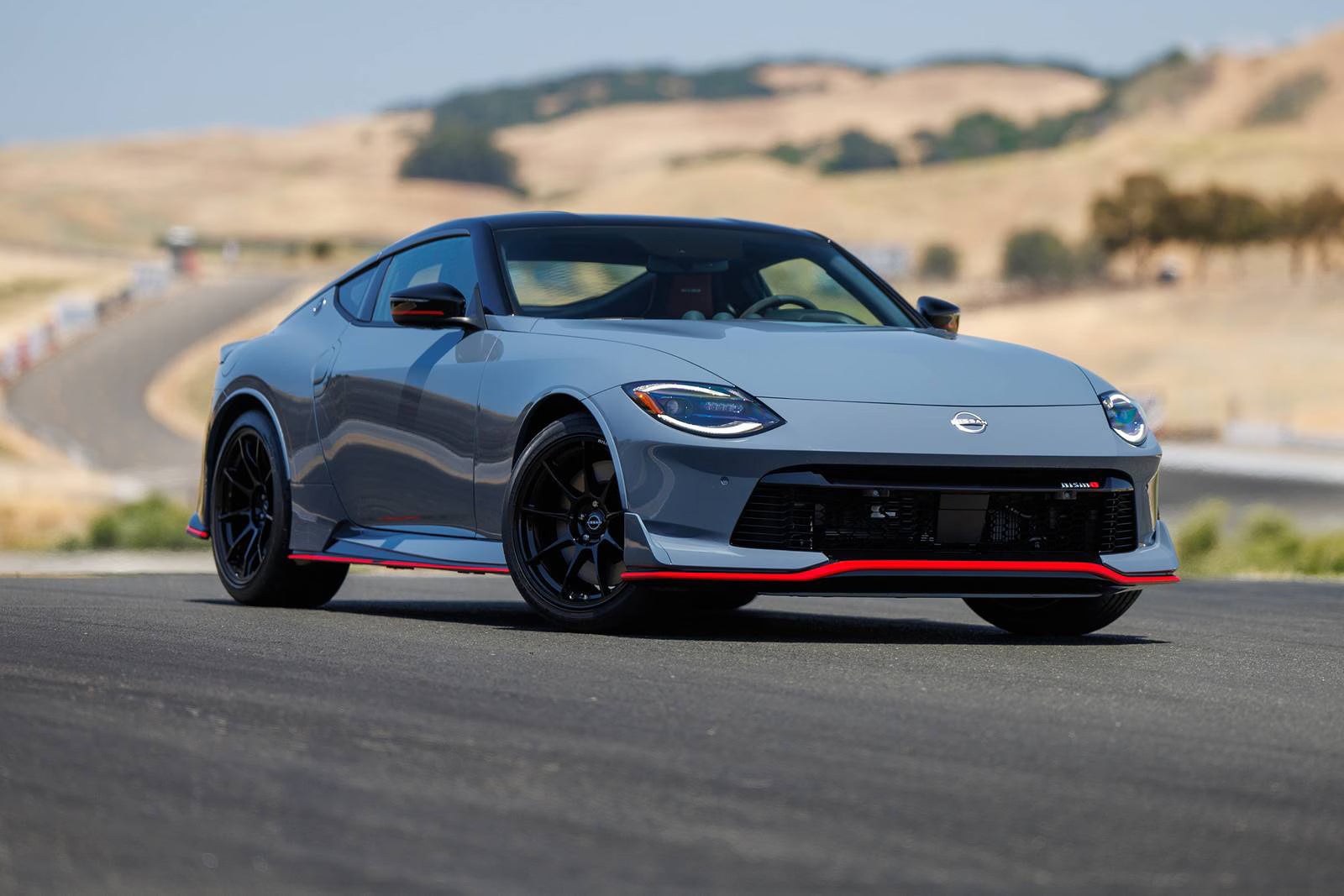
The Performance trim introduces hardware specifically engineered for track capabilities. The mechanical limited-slip differential distributes power more effectively during high-speed cornering compared to the standard open differential on the Sport trim.
For stopping power, the Performance trim upgrades to Akebono 4-piston front calipers with 14.0-inch rotors. The Sport trim utilizes a capable but standard 2-piston front brake setup.
To experience how this translates on Texas roads, browse our available 2026 Nissan Z inventory to find your preferred trim.
Specification Comparison
| Feature | 2026 Nissan Z Sport | 2026 Nissan Z Performance |
|---|---|---|
| Engine | 3.0-liter Twin-Turbo V6 | 3.0-liter Twin-Turbo V6 |
| Horsepower | 400 hp | 400 hp |
| Torque | 350 lb-ft | 350 lb-ft |
| Differential | Open Differential | Mechanical Limited-Slip |
| Front Brakes | 2-piston calipers | 4-piston Akebono calipers |
| Wheels | 18-inch aluminum-alloy | 19-inch RAYS forged-alloy |
Unsprung Weight & Dynamics
The wheel configuration also differs between the two models. The Sport trim features 18-inch aluminum-alloy wheels. The Performance trim steps up to 19-inch RAYS forged-alloy wheels. The forged construction reduces unsprung weight at each corner. This weight reduction improves suspension response time over uneven surfaces. Both vehicles maintain the mid-mounted front-engine and rear-wheel drive layout.
Maximum horsepower and torque figures are achieved when properly equipped. For official certification testing details, consult the specification database.