

2027 Nissan Rogue Hybrid e-POWER System: How It Works and Why It Matters
The 2027 Nissan Rogue Hybrid e-POWER uses dual electric motors to drive the wheels, with a gasoline engine acting solely as a generator. This third-generation e-POWER system is Nissan's first of its kind offered in the U.S. market, backed by nearly 2 million units sold globally since 2016. This page covers how e-POWER works, which features it enables, and how it compares to rival hybrid systems. View available inventory at Fort Worth Nissan.
Feature Overview: What Makes e-POWER Different
Most hybrid SUVs in the compact class use a gasoline engine to drive the wheels directly, with an electric motor stepping in as a supplement. The 2027 Rogue Hybrid flips that arrangement entirely. In the e-POWER system, the 1.5-liter turbocharged three-cylinder engine never touches the wheels. Its only job is generating electricity for the battery and dual electric motors that actually propel the vehicle.
The result is a compact SUV that drives with the torque delivery character of a fully electric vehicle while still refueling at any gas station. Car and Driver noted that "acceleration is immediate," and Edmunds wrote that e-POWER "gives Rogue the acceleration and braking characteristics of a fully electric vehicle (that's a good thing) without ever having to be plugged in."
That no-plug convenience is a meaningful distinction. Owners in Fort Worth who do not have a home charger, or who park in apartment complexes or shared lots, get the efficiency benefit of electrified driving without any charging infrastructure.
How It Works: The e-POWER Architecture Explained
The e-POWER system has three main components working in sequence:
The gasoline generator engine.
A 1.5-liter turbocharged inline-three runs independently of vehicle speed. It generates electricity on demand, charging the battery and supplying power to the motors. Because it is decoupled from wheel speed, the engine can operate at its most efficient RPM range, rather than being dragged up and down with the drivetrain.
The dual electric motors.
Two electric motors, one per axle, drive the wheels directly. There is no traditional transmission in the system. Torque is available immediately from a standing start because electric motors produce full torque at zero RPM. This is the same physics that makes fully electric vehicles feel quick off the line, and the Rogue Hybrid delivers that same sensation without requiring a charge.
Standard AWD through the dual-motor setup.
Because each axle has its own motor, AWD is inherent to the architecture. Every 2027 Rogue Hybrid comes with dual-motor AWD as standard equipment. The system can vector torque between front and rear axles with precision that a conventional mechanical AWD system cannot match at low speeds.
The drive mode interface reflects the electric-vehicle nature of the powertrain. A set of P-R-N-D buttons replaces the traditional gear selector, because there are no gears to select. The system also includes e-Pedal one-pedal driving, which uses regenerative braking to slow the vehicle to a complete stop when the driver lifts off the accelerator. Every time the vehicle decelerates, energy is recovered and fed back into the battery.
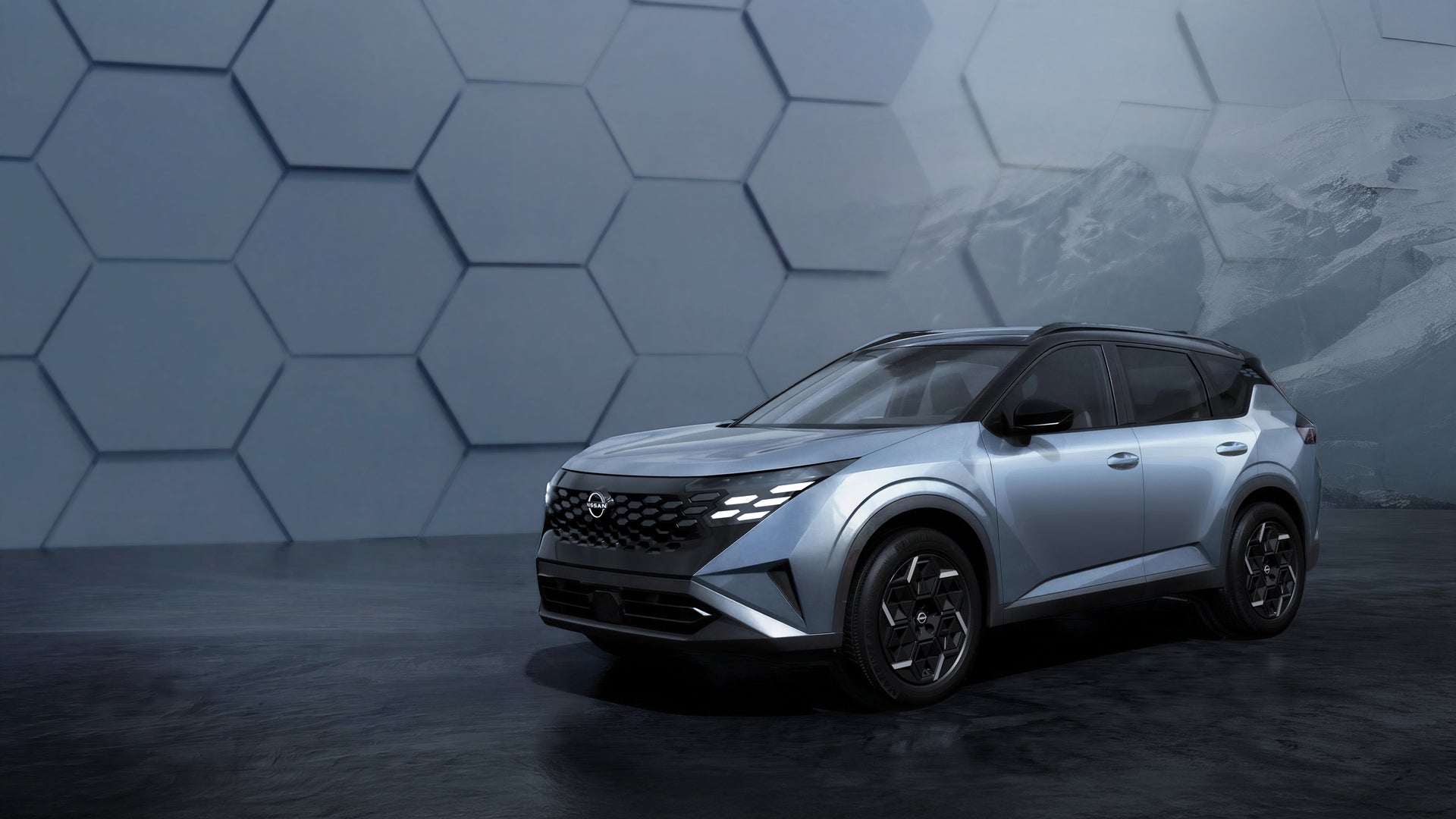
Across the Trims: e-POWER Availability on the 2027 Rogue
The 2027 Nissan Rogue Hybrid arrives as an all-new model expected in late 2026. Full trim-level details and feature breakdowns are still being confirmed ahead of launch. Based on information shared at Nissan's April 2026 Vision event in Nashville, the following is confirmed for U.S. availability:
- e-POWER third-generation hybrid system: standard across all 2027 Rogue Hybrid trims
- Dual electric motor AWD: standard on all trims
- e-Pedal one-pedal driving: standard
- P-R-N-D drive mode buttons: standard
- 14.3-inch 'monolith' multimedia touchscreen: standard
Because the e-POWER architecture is the foundation of the entire 2027 Rogue Hybrid model, no trim omits it or offers a conventional powertrain as an alternative within this vehicle line. Shoppers in Fort Worth looking for the e-POWER system do not need to navigate trim-level decisions around the powertrain itself.
Real-World Benefit: What e-POWER Means Day to Day
No charging required.
The most immediate day-to-day advantage is that the Rogue Hybrid never needs to be plugged in. Refuel at any gas station, exactly as with a conventional vehicle. This removes the range anxiety, charging time planning, and infrastructure dependency that come with plug-in hybrids and EVs.
Immediate torque from every stop.
Because electric motors power the wheels directly, throttle response from a traffic light or a highway on-ramp in the Fort Worth area is sharper than what a conventional engine delivers. The gasoline engine's RPM does not dictate how quickly the vehicle responds.
Quieter cabin at low speeds.
At low speeds and in stop-and-go traffic, the gasoline generator engine may not need to run at all, keeping the cabin noticeably quieter than a conventional hybrid where the engine is mechanically linked to the wheels.
Regenerative energy recovery on every deceleration.
With e-Pedal engaged, lifting off the accelerator feeds energy back into the battery. Drivers in urban environments, where braking is frequent, recover more energy than they would in highway-only driving. The system brakes to a full stop, so light traffic situations can be managed with one pedal entirely.
Precision AWD without mechanical complexity.
Dual-motor AWD with per-axle electric motors responds to traction changes faster than a traditional center differential. Wet roads, highway entrance ramps, and uneven surfaces that compact SUV buyers encounter regularly in North Texas get handled with torque adjustments measured in milliseconds.
How It Compares: e-POWER vs. Rival Hybrid Systems
The compact SUV segment has no shortage of hybrid options, but the mechanical approach varies significantly across brands.
Conventional parallel hybrids (common in the segment):
Most competing hybrid SUVs use a parallel architecture where the gasoline engine and electric motor both connect to the drivetrain and can drive the wheels simultaneously or independently. The gasoline engine's RPM is tied to vehicle speed in most driving situations, which limits how efficiently it can run. These systems are proven and fuel-efficient, but they do not deliver the same immediate-torque character as a pure electric drivetrain.
Plug-in hybrids (PHEVs):
PHEVs add a larger battery that must be charged externally to deliver an electric-only range. They offer real fuel savings for drivers who charge consistently, but they require charging access and carry a cost and weight penalty from the larger battery pack.
e-POWER's position:
The 2027 Rogue Hybrid sits in a different category from both. It drives like a full EV in terms of torque response and one-pedal capability, but it refuels like a conventional vehicle and carries no charging dependency. Alex Kwanten, managing editor of Autos at U.S. News & World Report, stated that "when the new Rogue Hybrid arrives this fall, it'll be packing tech that none of these rivals have."
The architecture is not new globally. Nissan has sold close to 2 million e-POWER vehicles worldwide since 2016 across multiple markets. The 2027 Rogue Hybrid is the system's U.S. debut in the Rogue nameplate, bringing a validated powertrain to the market where Rogue has already sold nearly 4 million units.
See the 2027 Nissan Rogue Hybrid e-POWER at Fort Worth Nissan
The 2027 Rogue Hybrid is expected to arrive in late 2026. Fort Worth Nissan is tracking inventory as units become available. If you want to be among the first to drive one, requesting an update now puts you ahead of general availability. The e-POWER system represents a genuine shift in how a compact SUV delivers power, and it is worth experiencing behind the wheel before making a purchase decision.
Frequently Asked Questions
Does the 2027 Nissan Rogue Hybrid need to be plugged in?
No. The 2027 Rogue Hybrid e-POWER does not require charging. The onboard 1.5-liter turbocharged three-cylinder engine generates electricity for the battery and motors, so the only refueling required is gasoline at any standard gas station.
What is Nissan e-POWER?
e-POWER is Nissan's series hybrid architecture in which a gasoline engine acts exclusively as a generator. Dual electric motors drive the wheels directly, with no traditional transmission. The system delivers full electric-motor torque response without requiring a plug or external charging.
How is e-POWER different from a regular hybrid?
In a regular parallel hybrid, the gasoline engine connects to the drivetrain and can drive the wheels. In e-POWER, the gasoline engine is mechanically isolated from the wheels. Only the electric motors drive the vehicle, making the driving character closer to a full EV than to a conventional hybrid.
Does the 2027 Rogue Hybrid come with AWD?
Yes. Dual-motor AWD is standard on every 2027 Rogue Hybrid. One electric motor powers the front axle and one powers the rear, which is how AWD is achieved without a mechanical center differential.
What is e-Pedal on the 2027 Rogue Hybrid?
e-Pedal is a one-pedal driving mode that uses regenerative braking to slow the vehicle to a complete stop when the driver lifts off the accelerator. It recovers energy in the process and reduces brake wear over time.
When will the 2027 Nissan Rogue Hybrid be available?
Nissan confirmed at its April 2026 Vision event in Nashville that the 2027 Rogue Hybrid will launch in the U.S. and Canada in late 2026. Fort Worth Nissan is accepting requests for availability updates ahead of delivery.
Has the e-POWER system been proven in other markets?
Yes. Nissan has sold nearly 2 million e-POWER vehicles globally since the system launched in 2016. The 2027 Rogue Hybrid represents the third generation of e-POWER and its introduction to the U.S. market in the Rogue nameplate.

New vehicle pricing includes all offers and incentives. Tax, Title and Tags not included in vehicle prices shown and must be paid by the purchaser.
Prices of the vehicles on this website does not include options and/or accessories that have been installed at the dealership, which will be an additional cost. On most vehicles this will be Lifetime Warranty Window Tint, Wheel Locks and Touchscreen protector for $1,295.
While great effort is made to ensure the accuracy of the information on this site, errors do occur so please verify information with a customer service rep. This is easily accomplished by calling us at 817-560-9000 or by visiting us at the dealership.